
Jeonju brings together traditional architecture, royal history, craft culture, and one of Korea’s most celebrated regional cuisines. Its main sights are compact enough for a relaxed walking trip, making the city an excellent first destination beyond Seoul and Busan. This guide covers transport, essential places, food, accommodation, and practical one- and two-day itineraries.
Why visit Jeonju?
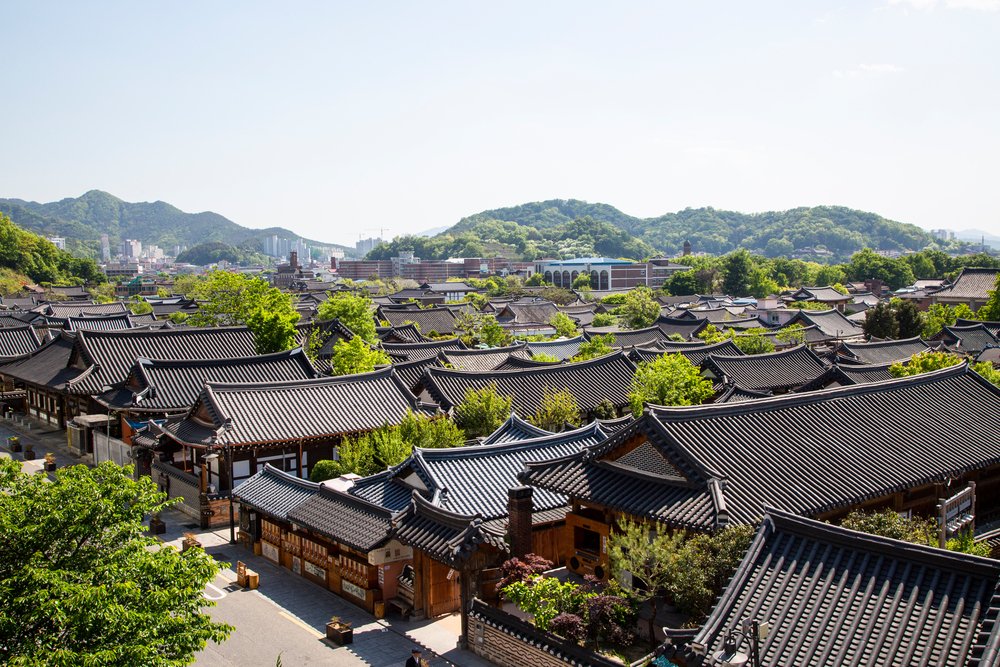
Jeonju is easy to enjoy without an aggressive schedule. The Hanok Village places historic homes, museums, workshops, cafés, restaurants, and major landmarks within walking distance. The city is also the home of Jeonju bibimbap and a strong destination for travelers interested in makgeolli, hanji paper, traditional crafts, and Korean-style accommodation.
How many days?
One full day covers the Hanok Village and its central landmarks. Stay for two days if you want time for museums, craft experiences, quieter morning streets, a traditional meal, and nearby areas such as Jaman Mural Village or Deokjin Park without rushing.
Getting to Jeonju
KTX trains connect Yongsan Station in Seoul with Jeonju Station. Express and intercity buses are another practical option and may suit travelers starting from other regions. Jeonju Station is east of the Hanok Village, so continue by local bus or taxi. Check current schedules and terminal locations before departure.
Getting around
The core heritage area is best explored on foot. Local buses and taxis are useful between the railway station, bus terminals, Deokjin Park, and your accommodation. Wear comfortable shoes because stone lanes, slopes, and long periods of standing are common.
Essential places
- Jeonju Hanok Village: hundreds of traditional-style buildings filled with guesthouses, workshops, cafés, and cultural spaces.
- Gyeonggijeon Shrine: a calm historical complex associated with the portrait of King Taejo.
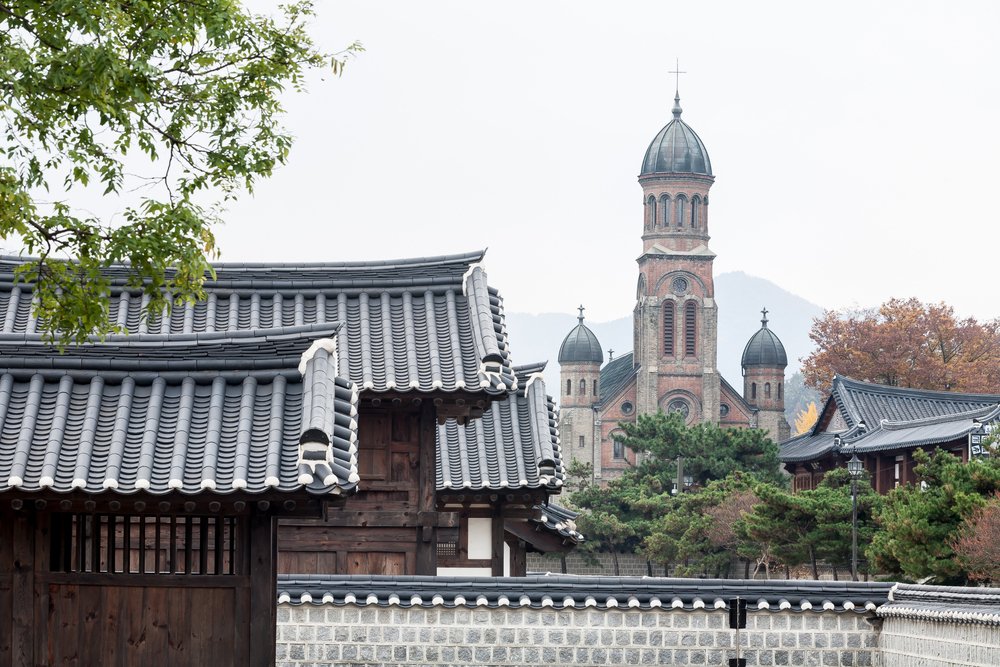
- Jeondong Cathedral: a prominent brick church beside the heritage district.
- Omokdae: a hillside pavilion and useful viewpoint over the tiled roofs.
- Jeonju Hyanggyo: a historic Confucian school known for its spacious grounds and old ginkgo trees.
- Jaman Mural Village: a colorful hillside neighborhood near Omokdae.

One-day itinerary
- Arrive early and walk through Jeonju Hanok Village before the busiest hours.
- Visit Gyeonggijeon Shrine and Jeondong Cathedral.
- Eat Jeonju bibimbap or a traditional set lunch.
- Continue to Omokdae and Jaman Mural Village.
- Walk through Jeonju Hyanggyo and return for an evening meal in the village.
Two-day itinerary
Follow the central heritage route on day one. Begin day two with a quiet morning walk, then choose a hanji or craft workshop, visit a museum, and continue to Deokjin Park or explore the market and modern downtown. Staying overnight also lets you see the village after day-trip crowds leave.

What to eat
Jeonju bibimbap is the essential local dish, combining rice with seasoned vegetables and other toppings. Also look for bean sprout soup with rice, choco pies from local bakeries, and shared makgeolli table meals for adults who drink alcohol. Popular restaurants can have queues, so eat slightly before or after the usual lunch period.

Hanbok and craft experiences
Hanbok rental shops are common, but compare rental time, included accessories, storage, and return rules. Hanji paper, fans, calligraphy, and small food workshops provide alternatives that connect more directly with local craft traditions. Reserve ahead during weekends and holidays.
Where to stay
A hanok guesthouse inside or near the village provides atmosphere and easy early-morning access. Before booking, confirm whether the room uses floor bedding, whether the bathroom is private, and how far you must carry luggage. Hotels near downtown or the bus terminals offer more conventional facilities.
Best time and practical tips
Spring and autumn offer comfortable walking weather, while summer is hot and humid and winter can be cold. Weekdays and early mornings are quieter. Respect private residences, keep noise low at night, ask before photographing people, carry water, and use a Korean map application for local navigation.
Continue planning
Discover more regional destinations in our Beyond Seoul & Busan collection and prepare with our South Korea travel tips.