
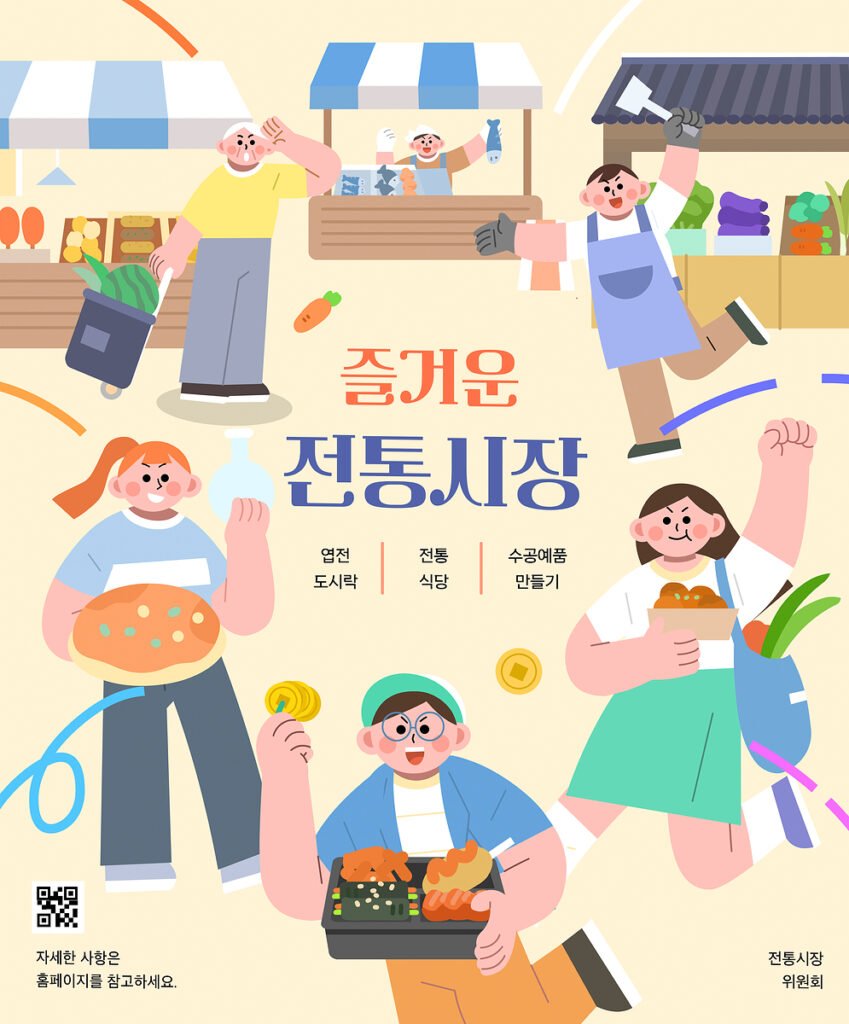
Korean traditional markets bring together produce stalls, prepared food, clothing, household goods, and long-running family businesses. They are lively places to eat and observe daily routines, but narrow aisles and unfamiliar ordering can overwhelm a first-time visitor. This guide explains how to choose a market, order respectfully, pay, eat, and avoid common mistakes.
Choosing the right market
Markets have different specialties. Some focus on street food, others on seafood, textiles, antiques, or neighbourhood groceries. Famous tourist markets are convenient but can be crowded; a local market may be calmer but have less English signage. Check the market’s official information, closed days, and individual stall hours before travelling.
When to visit
Late morning is often a practical starting time: many food stalls are open, ingredients are fresh, and dinner crowds have not arrived. Some vendors close after selling out, while night markets may operate only on selected dates or seasons. Avoid assuming every market follows the hours shown for the overall building.
Popular foods to recognise
- Bindaetteok: savoury mung-bean pancake, often crisp outside.
- Tteokbokki: rice cakes in a sweet-spicy red sauce.
- Gimbap: rice and fillings rolled in seaweed.
- Mandu: steamed or fried dumplings.
- Hotteok: filled pancake, commonly sweet but sometimes savoury.
- Kalguksu: knife-cut noodles served in broth.
- Eomuk: fish cake, frequently served with warm broth.
Recipes and allergens vary by stall. A familiar dish name does not guarantee identical ingredients.
How to order step by step
- Observe the stall. Check the menu, prices, queue, and where customers collect food.
- Wait at the proper side. Do not block the cooking area or neighbouring shop.
- Point and confirm quantity. Hold up one or two fingers if pronunciation is difficult.
- Ask the price before ordering when it is not displayed, especially for seafood sold by weight.
- Pay as directed. Some vendors accept cards, while small stalls may prefer cash or local mobile payment.
- Return bowls and sort rubbish. Follow the system used by that stall.
Useful Korean phrases
- Igeo hana juseyo. — One of these, please.
- Eolmayeyo? — How much is it?
- Ka-deu dwaeyo? — Can I pay by card?
- An maepge hae juseyo. — Please make it not spicy.
- Yeogi-eseo meogeodo dwaeyo? — May I eat here?
- Pojang hae juseyo. — Please pack it to go.
Market etiquette
- Ask before photographing a vendor, their face, or close-up work.
- Do not handle produce or seafood unless invited.
- Avoid bargaining at prepared-food stalls with clearly posted prices.
- Keep large suitcases out of narrow aisles.
- Order a reasonable amount if using a stall’s limited seats.
- Do not occupy shared tables after finishing when people are waiting.
- Separate food waste, liquids, recyclables, and general rubbish as instructed.
Food safety and allergies
Choose busy stalls with active turnover and food that is cooked thoroughly. Wash or sanitise your hands before eating. If you have a serious allergy, remember that shared grills, oil, knives, broth, and sauces create cross-contact risks. A translation card can help, but it cannot guarantee safety. When communication is uncertain, choose packaged food with an ingredient label or eat at a restaurant that can answer your questions clearly.
Cash, cards and prices
Bring a modest amount of Korean won in small notes even if you prefer cards. Confirm prices before committing to seafood, fruit boxes, or goods priced by weight. Promotions and tourist passes can change, so rely on information displayed that day rather than an old video.
Photography without causing disruption
Wide photos of signs and architecture are usually less intrusive than close portraits. Keep moving with the flow, step aside before framing a shot, and never place equipment on a vendor’s counter. Food looks best in indirect daylight near the stall, but serve it promptly rather than delaying a busy seller.
A simple tasting plan
Share small portions so you can try more than one dish. Begin with something savoury, add noodles or dumplings, and finish with hotteok or seasonal fruit. Carry tissues and water, but buy drinks from the market when practical to support local vendors.
Frequently asked questions
Do vendors speak English?
Some do, especially in major visitor markets, but not all. Photos, displayed prices, polite gestures, and simple Korean phrases are usually enough for a straightforward order.
Is bargaining expected?
Not for ordinary food with a posted price. Negotiation may occur for certain goods or bulk purchases, but it should remain friendly and reasonable.
Can vegetarians eat easily?
Some dishes appear meat-free but may contain anchovy broth, fish sauce, egg, or shared cooking oil. Ask specifically and have a backup option.
Plan your visit
Pick one market and focus on its specialty instead of racing between several. The Korea Tourism Organization’s traditional market guide is a useful starting point. You can also connect the experience with our Korean cooking class guide and K-Culture hub.